A Middledom Book View
I’ve been to Amsterdam and various other old cities in the Netherlands. Walking down their streets, alongside and over canals, clattering over cobblestones and ambling into five century old sanctuaries gives a sense of the Netherlands’ long history that is hard to escape. Even in the countryside you can feel the old ways of being and doing. And in spite of so much that is new and modern, there is always something old and traditional close at hand.
I have not yet been to New York, where the New Amsterdam that flourished four centuries ago is now unrecognizable — transformed into one of the greatest of new world cities. But I am about to go, and during our weeklong trip we plan to wander its streets and enter its monuments in search of its ways of being and doing. We will not be visiting a Mamdani grocery store or the Trump Tower — we’d like to dive deeper than that. But there isn’t much left from before 1900.
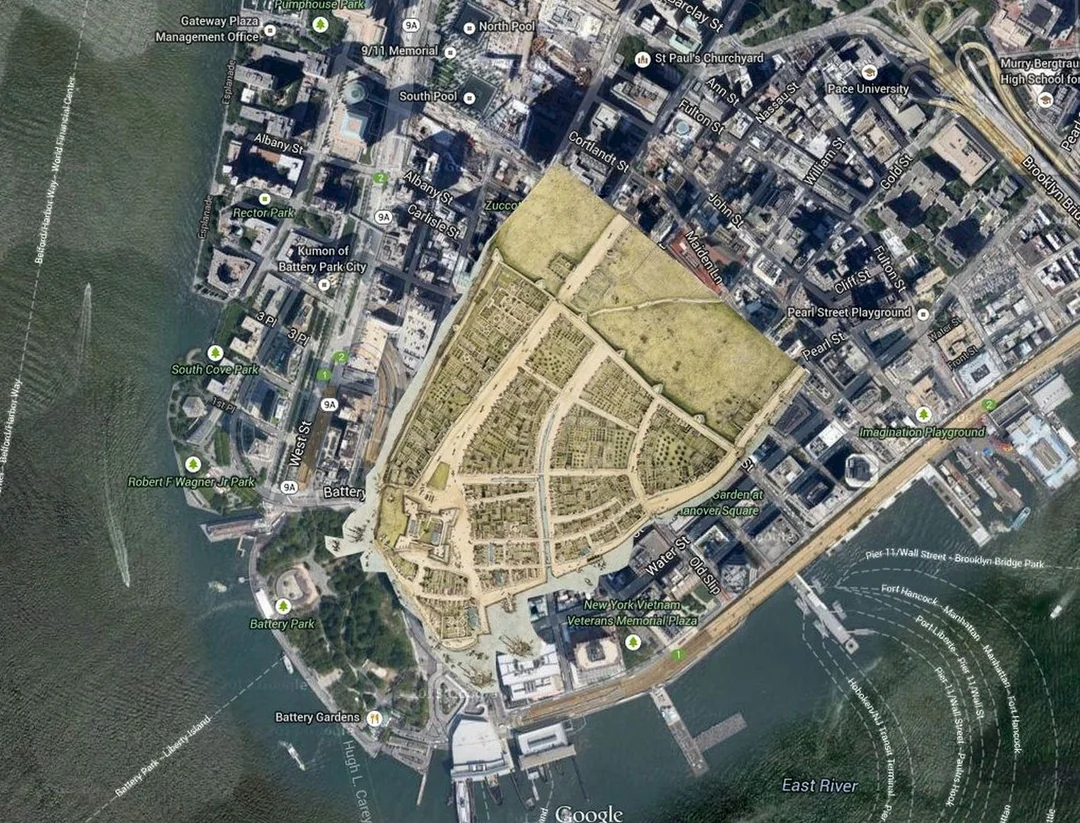
Our North American culture, heavily shaped by new world sensibilities, prefers to live in the moment and focus on the future. So its heritage is not as safe from the wrecking ball as in Europe. But New York’s cultural history does go deep, and I intend, at the very least, to be aware of those foundations as I walk the streets above. I will be on the lookout for New Amsterdam.
Most everybody knows vaguely that the Big Apple was once a New Amsterdam within a New Netherland. But that Dutch claim, officially, lasted only forty years (1624 – 1664) before the fledgling city lost its name, morphed into New York and exploded with growth. Its origin quickly became a forgotten footnote in popular history (especially the American kind). The Dutch, no doubt, were not so ready to forget, and this Dutch Canadian is now eager to explore.
Soon after our retirements and a celebratory old world tour in the summer of 2023, I came across a book that, twenty years ago already, had broken through America’s collective amnesia and cleared a path, back through history from the new York of today to the Amsterdam of old.
The Island at the Center of the World: The Epic Story of Dutch Manhattan and the Forgotten Colony that Shaped America, by Russell Shorto c 2004
It was a satisfying read and a nice addition to my smattering of history books. The work is based on archives curated and translated by Charles Gehring starting in 1974. Russell Shorto has spun the details into an engaging story spanning two continents and half a century, full of characters, intrigue and historical detail. The book became a best seller and won multiple awards.
That wealth of details has blurred in my mind by now, but the book’s historical thrust and sociological conclusions have stayed with me. I can’t begin to replicate the effect here, but I will share just a few quotes before making some observations, mostly from the book’s last chapter: Inherited Features.
The Island at the Center of the World
Quotes from: The Island at the Center of the World: The Epic Story of Dutch Manhattan and the Forgotten Colony that Shaped America, by Russell Shorto c 2004
- The Netherlands of this time [17th century] was the melting pot of Europe. (6)
- Upward mobility was part of the Dutch character. (28)
- Tolerance was more than just an attitude in the Dutch Republic. (96)
- As late as 1750 . . . Dutch was still the only European language the [local, Hudson watershed indigenous] tribes spoke (310)
- There is first, the simple fact that the very part of America in which multiethnic society first formed was also the region where the Dutch colony had been. (313)
- American realities with Dutch roots: cookies, Santa Claus, cole slaw, boss, scout/district attorney (314)
- In 1686 the New York City Charter was taken over from the original city charter granted by the Netherlands (315)
- The Island of Manhattan became the gateway to America for generations of immigrants, and it was because of this that the legacy of the Dutch colony got amplified (316)
Rooted as I am, up north in the Netherlands, I’m aware of the reality gap between Amsterdam’s golden-age merchants and the not so golden ruralites. Yet there are qualities of temperament and ideals that permeated Dutch society as a whole, which would have carried over to the New World along with the Dutch West India Company’s mix of enterprising city dwellers and industrious country ‘patroons’.
Of significance here, among these qualities, is tolerance. A huge influx of refugees into Holland, beginning around 1585, mixed things up considerably. And in the ports and hubs like Amsterdam, traders and sailors from all over the known world coloured the mix even further. Dutch entrepreneurial spirit valued cooperation more than dissent, even when beliefs clearly collided. Toleration, tempered by its own success, had became a strong suit of Dutch culture.
New Amsterdam was established by this trade network, so the new town inevitably became as cosmopolitan as its mother city. This contrasted noticeably with British and Puritan New England settlements up and down the Atlantic coast where control was tight, class was constrained and religion was rigid. Dutch tolerance even extended to (social) messiness, a feature one might recognize from later, unfortunate layers of chaos in New York City streets. Freedom was more important than order, at least to a point.
The Dutch Republic was a decentralized union of chartered, self determined trading cities, while England was much more centralized. So the Dutch burghers of New Amsterdam expected as much when they were granted city rights by the Netherlands (1653) and were loathe to give up those rights when subsequent charters were issued by English and American governors (1686 and beyond).
When the rights to New Amsterdam were once and for all traded to the English for their rights to Pulau Run (and its nutmeg), the Dutch who had settled in Manhattan and inland did not leave. They carried on with trading and enterprise as if nothing had happened, exercising the freedoms that they were accustomed to. When you feel yourself to be master of your own fate, no matter what your status, then it does not matter so much who sets themselves up in authority over you, as long as this authority is constrained. A natural disdain for overbearing authority, already evident in Dutch culture and history, became a hallmark of the New York innovators and climbers, and one could easily say of America as a whole.
There is so much more in this book that is worth retelling, including the interactions of the Dutch with Native Americans, who certainly shared a penchant for freedom to trade and succeed. In fact it could be argued that the Dutch and the Mohawk/Haudenesaunee began as kindred spirits and that their combined example in this early American history lies at the heart of the American Dream. But I’ll leave that for next week.
It’s an open question of course, the extent to which these early Dutch or Indigenous or Manhattan characteristics are noble, or the extent to which they have survived. I certainly feel myself fitting the mold — avoiding the straightjackets of convention and straining against imperious church and synodical leaders and practices, while viewing world news, despairingly, through my libertarian lens.
But how about New York today? America? The world at large? Whatever is true. whatever is noble, whatever is right is still deeply embedded in our culture, but sometimes it’s hard to find back. I guess I’ll just have to keep searching.
Next Week
Haudenesaunee Heritage
A look at how the Haudenesaunee/Mohawks that traded with the Dutch colony affected American culture. Based on the book 1491

Leave a Reply