On our trip to New York City, we will be travelling back and forth by train. This Toronto to New York Amtrak route runs along the northern reaches of Haudenosaunee traditional territory. First, it passes within an hour’s travel west to the Six Nations Reserve before heading east into New York, through Wenro, Seneca, Cayuga, Onondaga, Oneida and Mohawk territories, and then finally turns south to follow the Hudson River valley, where the Mohawks also came to dominate.
It’s a first time for me and I don’t know what to expect. The nitty gritty industrial back yards of towns and cities for sure. But I also hope to glimpse some remnants of the wilderness that once permeated New York State. For sure, I won’t see any indigenous villages up on the bluffs of the Hudson River — they had been overgrown very early on after old world diseases decimated local populations. Maybe the only ghosts to be seen will be up in the Manhattan high rise wilds.
Haudenosaunee heritage hardly seems relevant anymore to those living in or travelling through these traditional territories. It can be easily acknowledged, but not so easily understood and valued. The old ways inevitably got buried under layer upon layer of progress and modern culture. Only here and there do they poke through and make themselves known.
But you have to know what you’re looking for and leave off the blinders.
A good guide can be found in the work of American journalist Charles C. Mann, entitled “1491: New Revelations of the Americas Before Columbus”, which was published some twenty years ago. This book roams over the North and South American landscape looking for clues to counter the claim which animates much of the environmental movement that “the Americas in 1491 were an almost untouched, even Edenic land, ‘untrammeled by man,’ . . . what geographer William Denevan calls ‘the pristine myth.’”
Mann approaches this task with a journalist’s eye and an engaging style, touching down along points from Peru to Plymouth and reporting on the work of a variety of scientists. According to Wikipedia “the book presents recent research findings from different fields which suggest human populations in the Western Hemisphere—that is, the Indigenous peoples of the Americas—were more numerous, had arrived earlier, were more sophisticated culturally, and controlled and shaped the natural landscape to a greater extent than scholars had previously thought.
The chapter that most intrigued me was the one that lay closest to home, mine and the author’s as well. The book’s “Coda: The Great Law of Peace” occupies a special place in the book — a final chapter and a challenge to root ourselves in the culture of this new world as it was before it was overrun.
To illustrate Mann’s thesis, I will simply quote highlights from this Chapter 11.
Coda: The Great Law of Peace
Quotes from: Mann, Charles C.. 1491 (Second Edition): New Revelations of the Americas Before Columbus . Knopf Doubleday Publishing Group. Kindle Edition.
For all these reasons, this book uses “Indian” and “Native American” interchangeably, with the latter serving mainly to avoid repetition. Note, though, that I use these terms as cultural and geographical categories, not racial ones.
To be sure, apostles of freedom have risen in many places. But an overwhelming number have been inspired by the American example—or, as it should perhaps be called, the Native American example, for among its fonts is Native American culture, especially that of the Haudenosaunee.
The Haudenosaunee were one of the greatest indigenous polities north of the Río Grande in the two centuries before Columbus and definitely the greatest in the two centuries after.
In creating such checks on authority, the league was just the most formal expression of a region-wide tradition.
In the same sense, it was also a feminist dream: the Five Nations were largely governed internally by the female clan heads,
Nobody disputes that the Haudenosaunee exemplified the formidable tradition of limited government and personal autonomy
The Indians of the eastern seaboard institutionalized their liberty to an unusual extent—the Haudenosaunee especially, but many others, too. (“Their whole constitution breathes nothing but liberty,” said colonist James Adair of the Ani Yun Wiya [Cherokee].) Important historically, these were the free people encountered by France and Britain—personifications of democratic self-government so vivid that some historians and activists have argued that the Great Law of Peace directly inspired the U.S. Constitution.
The Framers of the Constitution, like most North American colonists, lived at a time when Indians were large presences in their lives—ones that naturally influenced their ideas and actions.
The English, French, and Dutch who took over the hemisphere north of Florida were just as fascinated by native cultures as the Spaniards and Portuguese who emerged victorious to the south. The great European thinkers of the seventeenth and eighteenth centuries were much concerned with new ideas of liberty and the refashioning of society. How could they not have paid heed to the novel forms of government coming into view across the Atlantic?
As Franklin and many others noted, Indian life—not only among the Haudenosaunee, but throughout the Northeast—was characterized by a level of personal autonomy unknown in Europe.
Northeastern Indians were appalled by the European propensity to divide themselves into social classes.
The leaders of Jamestown tried to persuade Indians to transform themselves into Europeans. Embarrassingly, almost all of the traffic was the other way—scores of English joined the locals despite promises of dire punishment.
Influenced by their proximity to Indians—by being around living, breathing role models of human liberty—European colonists adopted their insubordinate attitudes,
It is clear that they were infused by the democratic, informal brashness of Native American culture.
The [Boston settlement] reality turned out to be different. Instead of creating Winthrop’s vision of an ordered society, the Pilgrims actually invented the raucous, ultra-democratic New England town meeting—a system of governance, the Dartmouth historian Colin Calloway observes, that “displays more attributes of Algonkian government by consensus than of Puritan government by the divinely ordained.”
A plain reading of the [Framers] writings shows that they took many of their illustrations of liberty from indigenous examples. So did the Boston colonists who held their anti-British Tea Party dressed as “Mohawks.” When others took up European intellectuals’ books and histories, images of Indian freedom exerted an impact far removed in time and space from the sixteenth-century Northeast. For much the same reason as their confreres in Boston, protesters in South Korea, China, and Ukraine wore “Native American” makeup in, respectively, the 1980s, 1990s, and the first years of this century.
So accepted now around the world is the idea of the implicit equality and liberty of all people that it is hard to grasp what a profound change in human society it represented. But it is only a little exaggeration to claim that everywhere that liberty is cherished—Britain to Bangladesh, Sweden to Soweto—people are children of the Haudenosaunee and their neighbors.
Sociological ‘findings’ like this are easy to entertain but impossible to confirm. Yet I found myself attracted to Mann’s last chapter thesis in the same way that I did to Shorto’s last chapter thesis in “The Island at the Center of the World”, in which he suggests that America “Inherited Features” from the Dutch. That their indelible stamp on New York City during its forty years as New Amsterdam and beyond gave it certain qualities that were then amplified by New York’s success and its place as the gateway to America.
There, in the 17th century Hudson Valley, native Dutch tendencies to be practically tolerant and egalitarian met up with native American ideals of liberty and personal autonomy. The two cultures began on an even footing, with mutual respect and entrepreneurial collaboration drawing them together in ways that are remembered to this day. Their legacies have faded but their significance endures. ~~
Explore Dutch influence on American culture
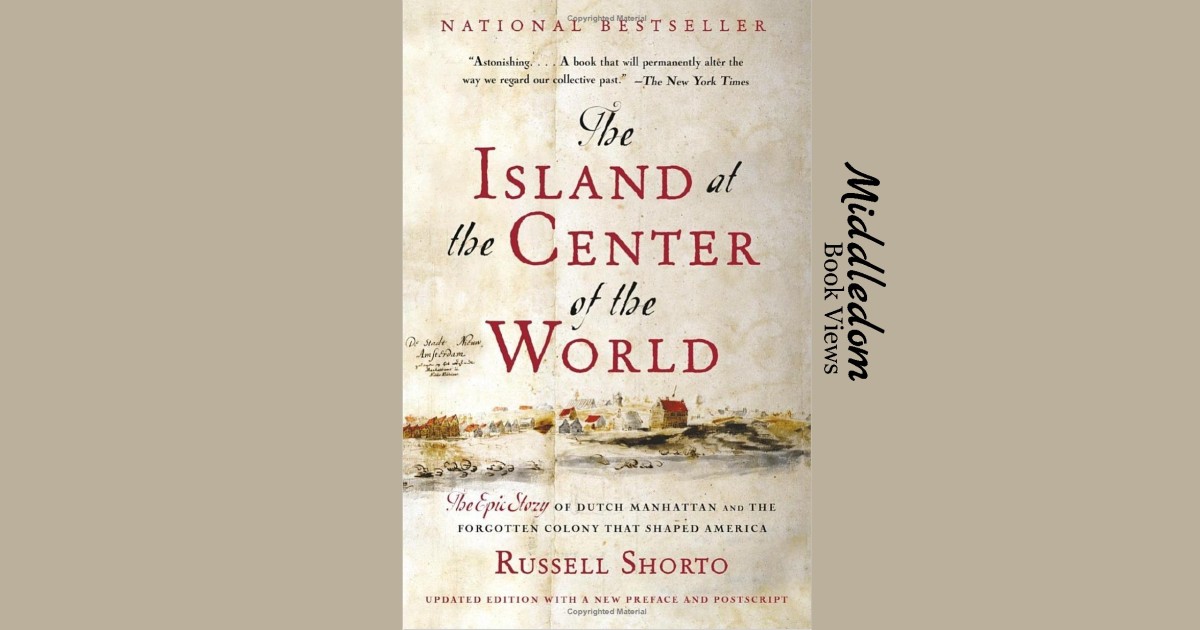
Most everybody knows vaguely that the Big Apple was once a New Amsterdam within a New Netherland. But that Dutch claim, officially, lasted only forty years (1624 – 1664) before the fledgling city lost its name, morphed into New York and exploded with growth.
Explore Dutch and Indigenous indigeneity

The parallels between indigenous peoples, like those from Canada or northern Holland, are significant.
Explore our hankering for untrammeled wilderness

I like to imagine what it was like then — my neighbourhood, or ravine-riven Toronto, or the Sarnia savannah. It would be nice, just once, to hike through old woods from the lake shore to the escarpment or High Park to Forest Hill, or along the beach from Centennial to Bright’s Grove, and see nothing but trees and meadows, streams and lake.
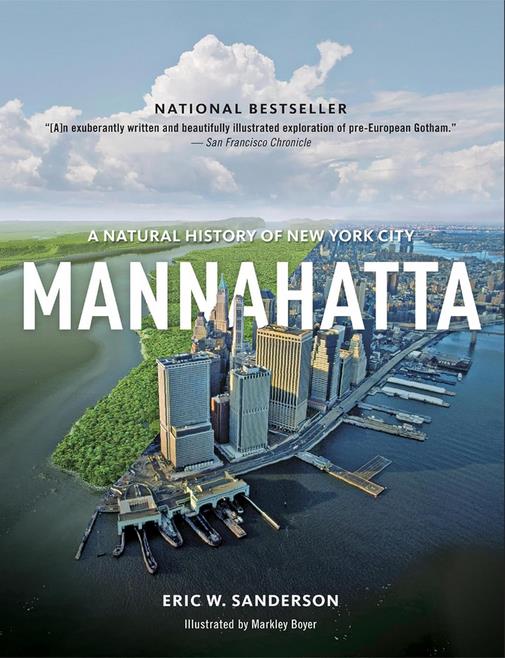
New book to read on the train
Leave a Reply