Christmas 2025
Schedule
December 5: The Great Voice, by Auke Jelsma, read by Stiny de Jong
December 12: Aleb and the Wise Man, written and read by Herman de Jong
December 19: Our Story, by Henry de Jong
December 26: Johan, by Herman de Jong (English & Gronings)
Enjoy also these Christmas songs
played by Herman de Jong
on the Covenant CRC organ,
December 19, 2025
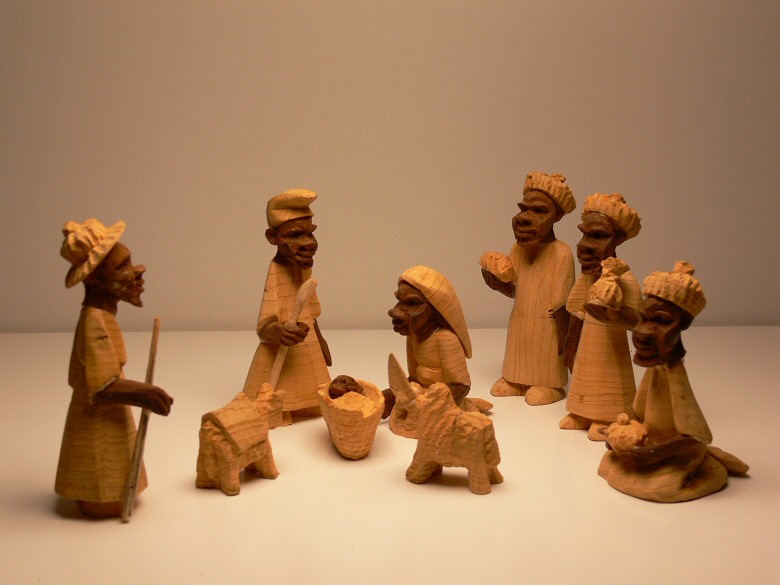
To all family and friends and community of Herman and Stiny de Jong, and of son Henry with Wendy and Jovita we wish you a blessed Christmas in 2025. A quarter century ago, our extended families would all still gather for Christmas. Now, a generation later, we have moved on and all we have left of that time are memories and photos. Oh, and some Christmas stories too — stories that were gifted to us by Herman and Stiny. There are just three of them (see above) so I have only this one opportunity to re-gift them to you.
The Christmas story is a many splendoured gem in the crown of Christendom. It is burnished to its gleam by a thousand thousand tellings, over vast times and by all manner of peoples in their far flung places. The story, even simply told, is never quite the same, taking on the spirit of the speaker and the worth of the listener so that all proclaim and may know that Jesus, their King, came for them too.
The story becomes extraordinary in the singing of another Handel’s ‘Messiah’, or when it figures in a sunlit stained glass window, or in a nativity play, or through the rich detail of a painting. But telling the story simply by word and voice remains preeminent.
Readings from the opening chapters of Mathew, Mark, Luke and John have graced our supper tables and devotions all the years of our lives. And from church pews we have heard these texts raised up high, in the still glow of candlelight service and as hooks from which to hang yet another sermon. Through the imagination and eloquence of preachers, we have heard the story anew, with ears to hear and hearts akindled.
Variations on these biblical texts abound and astound. Illustrated children’s Bible’s and story books captivate even the youngest among us. They nurture a familiarity that feels like home whenever the patter returns (Linus like), and as the story unfolds in the years of our youth, through the prime and decline of our life, right to the very day in which Jesus comes for us — again.
But it is not just the story of Christ’s birth that holds us in its lasting spell — we are embraced by the people who utter it. The mother and father who snuggle up to their children at bedtime to tell of the Christ child, the familiar voices of family taking their turn at reading, the pastors and church members who speak from within our fellowship, even the unknown authors and actors who play out the redemptive events of Christ’s coming while laying bare their souls — these all embody the Jesus who came for us too.
So the story grows, beyond the verses of Luke 2, into the hearts and imagination of the hearers. The Christmas story must inevitably become about us and our response to Christ’s coming for us. We wonder at our own place within the cosmic unfolding of redemptive history. We imagine what we would do and how we would react then or now. And, if the gift be with us, we tell our story — we stitch ourselves into the Christmas narrative.
The two Middledom stories, that have come in the last two weeks, are like that. The Great Voice imagines the encounter of a Swiss shepherd boy with the infant Jesus cradled within a lonely mountain hut. Aleb and the Wiseman spins its story around a princely student of one of the wise men, who searches for Jesus and finds faith in God. Both stories end with the cross.
The telling of such stories rises out of ancient, indigenous traditions. Before media, before night lighting and within multigeneration dwellings, before libraries and the enlightenment, story telling lit up the darkness with oral traditions that passed on knowledge and understanding of who we are and where we’ve come from.
There used to be time for this — lots of it in the dark seasons — and the elders could hone their stories and encourage the young ones to pick them up and carry them on. They didn’t have to be polished, let alone published. Respect and love gave room to the story teller and patience to the listener.
There must be many stories of story time within living memory. One is on this website — my uncle’s recollection of the ‘onderduiking dominee’ regaling family and guests with his ‘once upon a time’ fantasizing in ‘what we now call C.S. Lewis style’ during WW II evening hours. More general is a tradition of lay story tellers commissioned to present a Christmas story during the Sunday school children’s program between services. My wife’s uncle Bill was a master at this (perhaps not coincidentally he was also an organist like my dad). I would love to hear of more examples — from you perhaps.
Not all of this would have been profound. Some attempts at story telling might be dismissed as ‘verhaltjes met moraaltjes” (stories with morals). And much of it was not memorable. But that’s not the point really. It is the act of story telling that matters — the means justifies the end (however paltry). God (the Word) storied this (not so mediocre) world into being, his people into covenant and his Son into a manger and onto a cross. So then, it is the very nature of our being, as image bearers of God, to speak creatively into our world.
I am grateful for what our parents, Herman and Stiny, Cor and Trudy spoke into our lives. This website testifies to the strength of this creative force as it uncovers and presents the stories of generations past and present (see below). This strength comes not from any supposed greatness of writing or experience, but because the words are spoken by our people — spoken in love and in faith.
As 2026 approaches, we wish you a Happy New Year. May you too be a witness to each other and to this world in all that you say and in the stories you tell.
Henry de Jong, December, 2025
Middledom Stories
- Stories and poems of Herman de Jong
- Memoirs of Hinne de Jong
- Memoirs of Herman de Jong
- Memoirs of Harm and Dina van der Laan
- Memoirs of Harry van der Laan
- Memoirs of Cornelis de Jong
- Blog by Henry de Jong

Leave a Reply